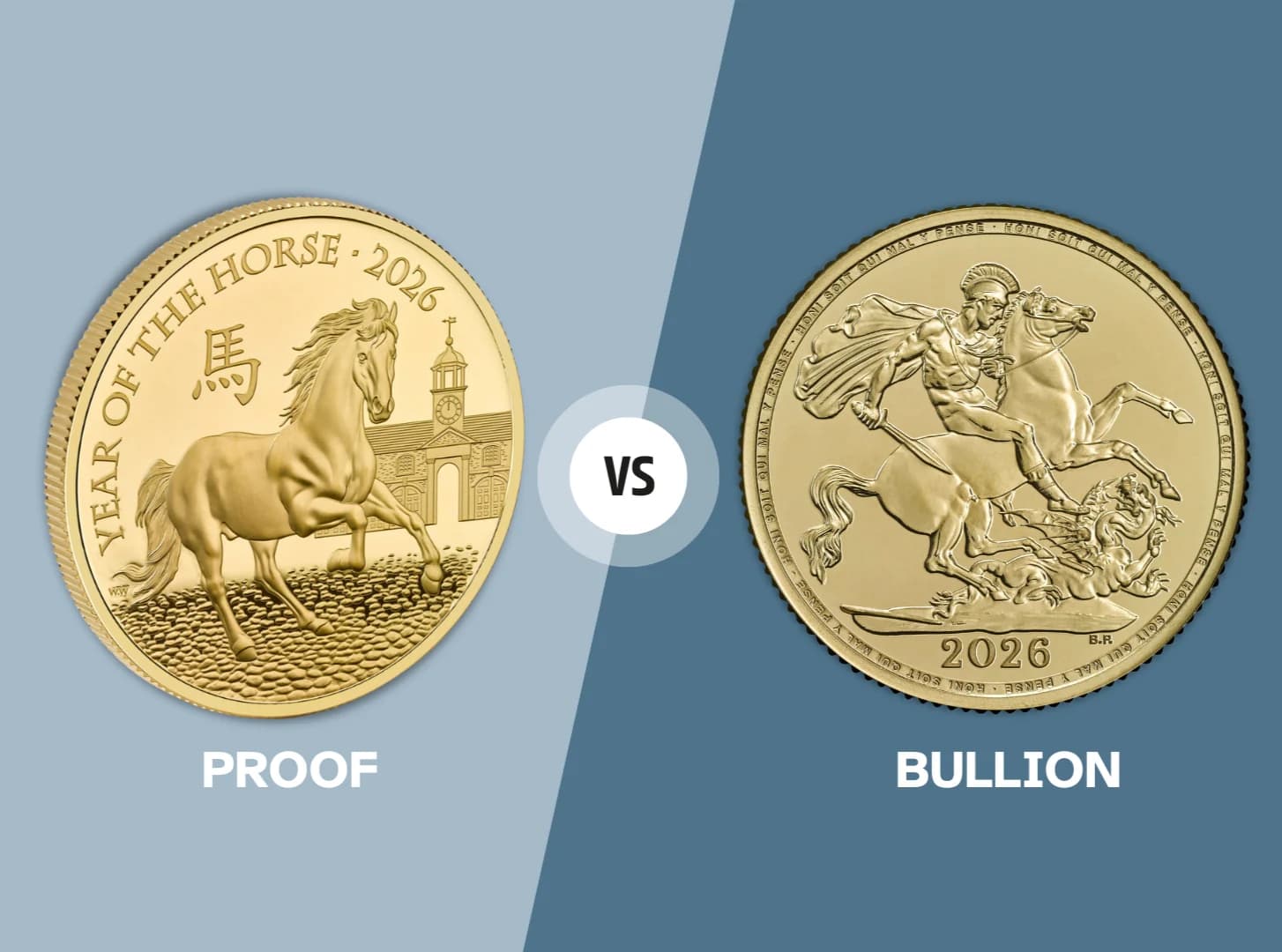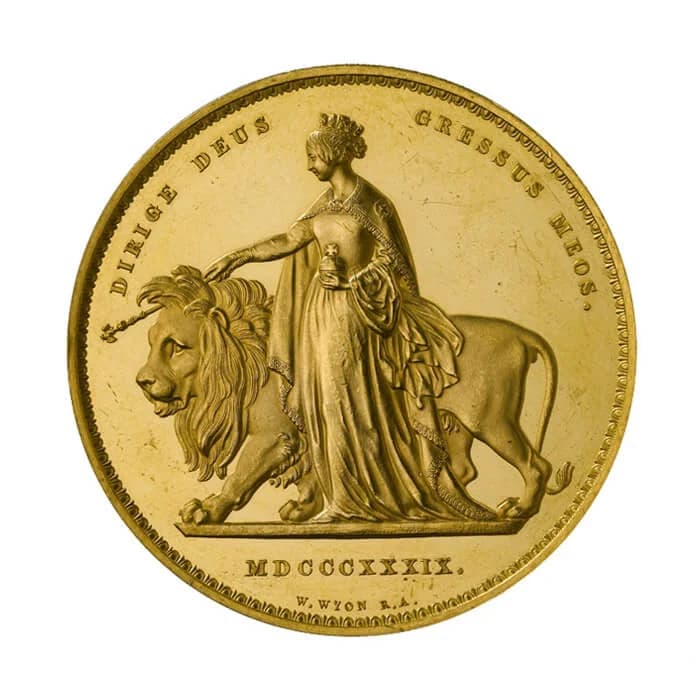
British proof coins are coins struck by The Royal Mint to the highest production standard, using polished dies and multiple strikes to produce mirror like fields and frosted design elements. They are made for collectors rather than circulation, typically issued in limited mintages with presentation packaging.
This guide explains what proof means, how proof coins differ from bullion and circulation coins, how they are presented and graded, and why they attract collectors.
What does proof mean in coinage?
Proof refers to a specialised minting process rather than the metal content. Proof coins are struck using highly polished dies and carefully prepared blanks, and each coin is struck multiple times to bring out the sharpest possible detail. The result is a distinctive finish: mirror like background fields against frosted, sculptural design elements, giving the strong visual contrast that defines a proof coin. On graded examples this contrast is what designations such as Ultra Cameo describe.
How are proof coins different from bullion and circulation coins?
A circulation coin is made quickly and in volume for everyday use, and a bullion coin is made primarily for its precious metal content with a standard strike. A proof coin is different in intent and handling from the start: it is never intended for circulation, it is struck slowly with production line care taken over each individual coin, and it is housed in a protective capsule from the moment it is made. Proof issues are also typically limited in mintage, with the number produced declared by The Royal Mint.
How are British proof coins presented?
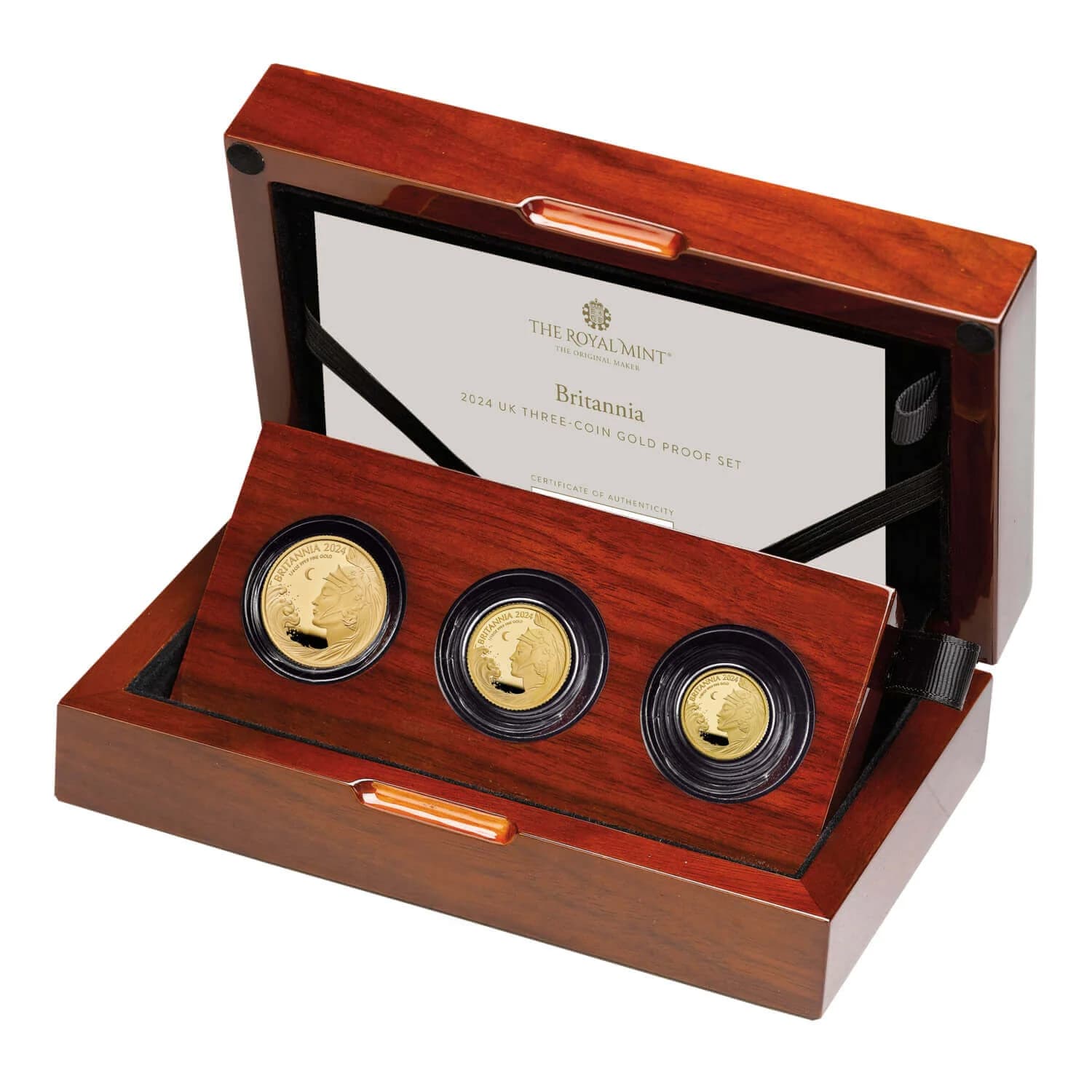
Proof coins are normally supplied in a protective capsule within a presentation case, accompanied by a certificate of authenticity recording the specification and issue limit. Many collectors also have proof coins independently graded: NGC and PCGS assess proofs under the PF designation, and a coin such as one graded PF70 Ultra Cameo has been certified flawless under magnification with the strongest frosted to mirror contrast. Capital Coins supplies British proof coins both ways, graded by NGC or PCGS, or ungraded with their original Royal Mint packaging.
Why do collectors choose British proof coins?
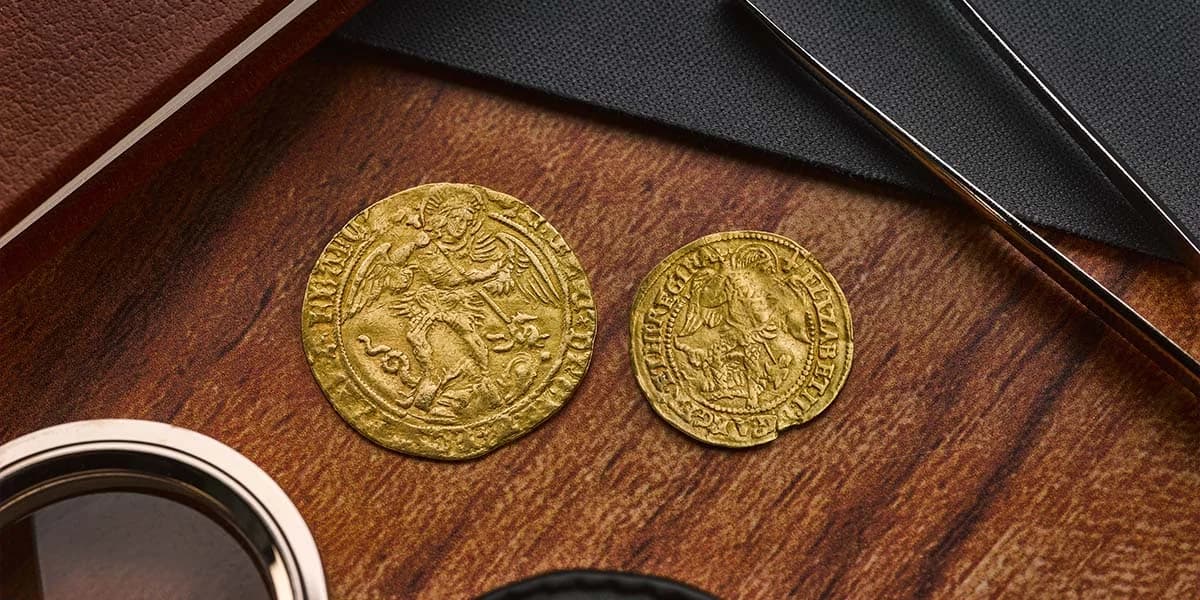
Collectors are drawn to British proof coins for their combination of heritage and craft. The Royal Mint has struck coins for over a thousand years, and its engraving tradition includes designs such as Benedetto Pistrucci's St George and the dragon, which has appeared on the Sovereign since 1817. Proof issues put that heritage in its finest form: limited declared mintages, the sharpest rendering of the design, and presentation intended to preserve the coin exactly as struck. For many collectors, a proof coin is the definitive example of an issue.
Final thoughts
British proof coins offer an accessible and rewarding entry point into coin collecting. Struck to the highest standard, issued in limited numbers and presented for preservation, they represent British minting craft in its most refined form. To read about the striking process itself in more detail, see our guide to how British proof coins are made.
Common questions
- What is a proof coin?
- A proof coin is a coin struck to the highest production standard using polished dies, prepared blanks and multiple strikes, producing mirror like fields and frosted design elements. Proof refers to the minting process, not the metal content, and proof coins are made for collectors rather than circulation.
- What is the difference between a proof coin and a bullion coin?
- A bullion coin is made primarily for its precious metal content with a standard strike, while a proof coin is struck multiple times with polished dies for the sharpest detail and a mirror like finish. Proof coins are issued in limited mintages with presentation packaging and are not intended for circulation.
- Are British proof coins graded?
- Many British proof coins are independently graded by NGC or PCGS under the PF designation, with PF70 representing a flawless example under magnification. Grading is optional, and proof coins are also collected ungraded in their original Royal Mint presentation packaging.
Capital Coins is a trading style of CC Britain Limited. All coins are offered as collectible items and not as investments. UK legal tender coins are currently exempt from Capital Gains Tax for UK residents and investment gold is exempt from VAT; tax treatment depends on individual circumstances and may change, and independent professional advice should be sought. Grading details are stated per individual coin and census figures reflect the certification service census at the time of writing. Prices are subject to the coins remaining unsold and reflect prevailing market conditions. Past auction results do not guarantee future value.